31 July 2010
My Dream
So I had a dream last night and since this is a blog why not talk about it? I could care less (or couldn't care less) if no one actually cares about others' dreams, and I'll skip all the interpretive elements like the mob, L'Abri, flying balloons, my dead dogs, South GA, and truck companies. Sylar and Spock were both in it, except Sylar was Skylar and Spock was an older version of the kid in the movie, not Zachary Quinto (although "Skylar" was). In it, not only was Spock Vulcan, he had Sylar's power, another way of opening brains, and had killed 9 people. And he was a good guy. The fact that IRL they're both played by Zachary Quinto didn't dawn on me 'til I woke up so it was amazing in my dream that they both had Intuitive aptitude. I guess it's just one of those things where you would have had to have dreamt it.


Black Books
just started watching black's booksThen you might like this:
My first view of of the show. For those who haven't seen it, it's about an alcoholic asshole who's had all life-love sucked from his soul and owns a bookshop, a neurotic bitch, and a positive, idealistic pushover. I don't understand though why hulu puts a matured audience stamp on it, and would appreciate anyone who explains it too me.
30 July 2010
Rethink News: Sources IV
For Rebekah. Cont. from...
Alright, the fact that there's a sources iv, means I'm not calculating well enough or too much info. I feel like I'm an undergraduate again with those ambiguous projects utterly beyond the actual skill necessary to execute. That's what this series is. Luckily it's a blog and there's no grade attached. (What the hell do I care about grades again?). Anyways, the theme of this post is your theological blogs. Big shout out to Faulk and Huff for their suggestions, etc. There's a lot here so I'm gonna quickly go through them.
Ligonier Blog - Jason commented this in an earlier post. It's Ligonier Ministries blog and I know a few of you readers, B included, like them.
The BioLogos Foundation Channel This is more for Matt than you, as these guys espouse a Theistic Evolutionary viewpoint. This is not an RSS feed but a youtube subscription. The forum does have an RSS feed, but that contains a lot more junk than just their "Conversations" vid, which are 5 minute spills by various folks.
I recently started subscribing to Son of Hamas. Quickly Mosab Hassan Yousef was a part of Hamas turned Christian spy.
Helm's Deep - doesn't the little LOTR freak in you just love that title? Paul Helm is basically an Christian philosophy professor Huff turned me onto.
Credenda/Agenda - This mag is put out by Canon Press and has some big names from the Reformed tradition in it.
CanonWired - Also Canon Press, but this is exclusively short "Question of the Day" videos to Douglas Wilson.
Rachel Held Evans - In her words:
fors clavigera - James K.A. Smith has a few blogs, but this is the one I'd like you to get. He's a philosophy professor at Calvin College in Grand Rapids. Of all the students to come from Christian colleges, probably this institution and Gutenberg in Eugene, Oregon, are the only ones I actually respect. He also has a blog where he just quotes passages from books he's reading that's kinda cool.
Blog and Mablog - Douglas Wilson's blog. I don't actually like it, and go on and off subscribing to it. Kev talked me back into it this last time.
Living Spirituality - Greg Laughery's blog. He's the director of the Swiss L'Abri.
Narrative and Ontology - This is probably one of the most popular theology blogs out there. In Philip Sumpter's words:
The Earth is Made of Atoms and Ideas - They've stopped posting on this as much, but it has some smart dudes from the old Derek Webb board that talk about anything.
The Politics of the Cross Resurrected - This guy is crazy, which is why I love him. We're symmetrically opposites.
The Strasbourg Inn - Done by Jacob Young, an x-Derek Webb board member.
In Hoc Signo - Kev could tell you more about this guy. DP Cassidy is Reformed minister in Texas.
Thinking through Christianity - a fun site. A friend of a friend's site. He's a medieval scholar and culturally engaged Christian. One of my favs.
cramer comments - a pacifist instructor of either theology or philosophy.
Faith and Theology - This is a forum that speaks to a large variety of theological interests. It's also one of the most popular theology blogs out there. I strongly recommend you give it a shot at least for a while.
speak what we feel: not what we ought to say - Put out by my friend Renea.
The Immanent Frame: Secularism, religion, and the public square - This is a fascinating forum. The first series they did was called, "a Secular Age" and was about Charles Taylor's book. Taylor fyi is probably the thinker I most wanna get into. Beyond him, it has some notable names including James KA Smith (Calvin Uni Prof.), Mark Lilla, others.
Alright, the fact that there's a sources iv, means I'm not calculating well enough or too much info. I feel like I'm an undergraduate again with those ambiguous projects utterly beyond the actual skill necessary to execute. That's what this series is. Luckily it's a blog and there's no grade attached. (What the hell do I care about grades again?). Anyways, the theme of this post is your theological blogs. Big shout out to Faulk and Huff for their suggestions, etc. There's a lot here so I'm gonna quickly go through them.
Ligonier Blog - Jason commented this in an earlier post. It's Ligonier Ministries blog and I know a few of you readers, B included, like them.
The BioLogos Foundation Channel This is more for Matt than you, as these guys espouse a Theistic Evolutionary viewpoint. This is not an RSS feed but a youtube subscription. The forum does have an RSS feed, but that contains a lot more junk than just their "Conversations" vid, which are 5 minute spills by various folks.
I recently started subscribing to Son of Hamas. Quickly Mosab Hassan Yousef was a part of Hamas turned Christian spy.
Helm's Deep - doesn't the little LOTR freak in you just love that title? Paul Helm is basically an Christian philosophy professor Huff turned me onto.
Credenda/Agenda - This mag is put out by Canon Press and has some big names from the Reformed tradition in it.
CanonWired - Also Canon Press, but this is exclusively short "Question of the Day" videos to Douglas Wilson.
Rachel Held Evans - In her words:
Charles Darwin said that the survival or extinction of an organism is determined by its ability to adapt to its environment. I think faith operates the same way. Changes in the environment--be they cultural or experiential—test the resilience of our faith and challenge us to rethink our most fundamental beliefs and values.
That’s what this blog is about. It's about how faith survives by continually changing. Its purpose is to reassess the fundamental elements of Christianity in the context of a postmodern environment…my insights coming from a small town famous for its fundamentalism, yours coming from wherever you may be.
I believe that knowing the answers isn't as important as asking the questions, and that following Jesus Christ is a lot less about being right and a lot more about, well, surviving. So even if that's all you're doing right now, feel free to join the conversation.
fors clavigera - James K.A. Smith has a few blogs, but this is the one I'd like you to get. He's a philosophy professor at Calvin College in Grand Rapids. Of all the students to come from Christian colleges, probably this institution and Gutenberg in Eugene, Oregon, are the only ones I actually respect. He also has a blog where he just quotes passages from books he's reading that's kinda cool.
Blog and Mablog - Douglas Wilson's blog. I don't actually like it, and go on and off subscribing to it. Kev talked me back into it this last time.
Living Spirituality - Greg Laughery's blog. He's the director of the Swiss L'Abri.
Narrative and Ontology - This is probably one of the most popular theology blogs out there. In Philip Sumpter's words:
OLD TESTAMENT THEOLOGY: The "OT" bit references historical, literary, cultural issues (the particulars), the "theology" bit references the Big Picture (and why it matters). These two poles are expressed in the title. This blog concerns everything in between.
The Earth is Made of Atoms and Ideas - They've stopped posting on this as much, but it has some smart dudes from the old Derek Webb board that talk about anything.
The Politics of the Cross Resurrected - This guy is crazy, which is why I love him. We're symmetrically opposites.
The Strasbourg Inn - Done by Jacob Young, an x-Derek Webb board member.
In Hoc Signo - Kev could tell you more about this guy. DP Cassidy is Reformed minister in Texas.
Thinking through Christianity - a fun site. A friend of a friend's site. He's a medieval scholar and culturally engaged Christian. One of my favs.
cramer comments - a pacifist instructor of either theology or philosophy.
Faith and Theology - This is a forum that speaks to a large variety of theological interests. It's also one of the most popular theology blogs out there. I strongly recommend you give it a shot at least for a while.
speak what we feel: not what we ought to say - Put out by my friend Renea.
The Immanent Frame: Secularism, religion, and the public square - This is a fascinating forum. The first series they did was called, "a Secular Age" and was about Charles Taylor's book. Taylor fyi is probably the thinker I most wanna get into. Beyond him, it has some notable names including James KA Smith (Calvin Uni Prof.), Mark Lilla, others.
Since its inception in the fall of 2007, The Immanent Frame has played host to a variety of discussions, from critical exchanges on Charles Taylor’s A Secular Age and Abdullahi Ahmed An-Na`im’s Islam and the Secular State to extensive discussions of the complex role of religion in the public sphere, U.S. politics, cognitive science, higher education, international affairs and global politics, debates about sexuality and marriage, and political and intellectual criticism.Anyways, even if you don't like it, Matt might.
Most recently, The Immanent Frame has hosted discussion series on religious freedom and U.S. foreign policy, critiques and revisions of the concept of civil religion and its role in contemporary public life, and the emergence of a “strong program” in the sociology of religion, as well as interviews and critical colloquies on important recent texts, including Webb Keane’s Christian Moderns: Freedom and Fetish in the Mission Encounter, Stefanos Geroulanos’s An Atheism that Is Not Humanist Emerges in French Thought, and Courtney Bender’s The New Metaphysicals: Spirituality and the American Religious Imagination.
Although I haven't drank enough, I feel like I should get a video camera out now and do one of those "Drunk History" vids for Socrates, play-acting all the reenactment roles myself. Don't worry, this is my last vid tonight. I mean post. Whatever...
Oh yea, William Henry Harrison is a classic example of someone who should not be president. Or ah, a good example.
Oh yea, William Henry Harrison is a classic example of someone who should not be president. Or ah, a good example.
29 July 2010
Starbucks to Apples
Does it seem like the Animate series has been focusing on the Marxists as of late? Still, where else can you get cartoon illustrated Žižek? It's funny, the first RSA post I started, I still haven't put up is of his x's lecture on the paradox of choice.
One good insight from the lecture that video is excerpted from:
One good insight from the lecture that video is excerpted from:
The lesson of the ongoing financial crisis is for me exactly the opposite one. Most of the gigantic sums of bailout money is going not to this passive minority but precisely to this Ayn Randian deregulated titans who failed in creative schemes and thereby brought about the meltdown. It is not the great creative geniuses who are now helping lazy ordinary people; it is the ordinary taxpayers who are helping the failed creative geniuses.
28 July 2010
"Starting Before the Beginning"

For Christmas, Kev gave me a copy of The Baptized Body by Leithart focusing on the efficacy of baptism. For the record, I haven't read the book and didn't get him anything. Chapter 1: "Starting Before the Beginning" addresses common modes of understanding baptism. The issue is these popular modes are loaded with baggage rendering them problematic for understanding baptism biblically. We bring with us in our interpretation many assumptions which prevent us from accurately formulating an understanding allowed by the text. We're biased. So this chapter deals with these biases and their wider theological implications.
Leithart explains the basis for modern interpreters as an a priori rejection of a sensus literalis read. They divorce signs from signified and deny the power of water both naturally and in itself. After excluding what we "know" is impossible, they then seek out an alternative interpretation to what they are forced to affirm.
Baptism and the Real Me
Leithart goes one anthropological step further and critiques Reformed ontological assumptions, primarily its dualism. Whereas Catholics believe that grace is infused through baptism, Protestants deny anything external can affect our soul, our "real me". Both share the assumption that who we truly are is an incorporeal soul, denying the possibility that the world can affect the core of us. In contrast the Scriptures both cede to a mutual rationality and conceptualize the inner self physically. While a strong inner/outer distinction remains intact, it's flushed out radically different from the Christianized Platonism of today. Here external events can and do change who we really and fundamentally are.
Baptism and the Social Contract
Further compounding the problem is the use of the social contract theory as a heuristic for understanding. Humans are individualistically and atomistically conceived entering and dissolving contractual relationships while remaining largely unaffected (an integrity model of relationships). Moreover, the "I" is primary and fundamental to our social interaction. In reality though, we become an I after primarily and fundamentally being a "you". We are socially and existentially placed within a community prior to forming a sense of self.
Do Baptist Talk to Their Babies?
Leithart then humorously explores the inconsistencies of credo-baptist practices. On the one hand, they often selectively employ intellectual criteria in arbitrating a capacity for faith. On the other, tied to their conversionism is a hesitancy for imposing such a Christian identity which can only "authentically" be assumed via a conscientious choice on the part of the child.
Why Sacraments Are Not Signs
At last Leithart begins to get into it. He acknowledges that baptism is a sign; however, argues that traditional theological conceptualizations leave an impoverished account of signs. Signs cannot be reduced to mere receptacles for presencing something other than the sign, as Augustine did. They are also to be enacted by God or us, not primarily for some realm only accessible through imagination, but for this world. A purely pedagogical purpose is too limiting for understanding signs.
Why Sacraments Are Not Means of Grace
Leithart argues that this understanding often reflects a false metaphysical view that reverts to a type of mediation between God and humanity. Rather grace has no ontological status; it's a mere token, the gift of God's favor. The moment of personal encounter is obscured by a linguistic schizophrenia that's impersonalizing and formulaic. More specifically he characterizes it as "mechanistic", analogously inaccurate. Grace becomes either thingified or some emanating quality. The formula itself doesn't do much; it's a faux-explanation instilling a false sense of understanding that is superfluous, sloppy, and obnoxious. Heuristic benefits are overplayed and need to be strategically discarded. Baptism is a type (grace) of favor.
Why Sacraments Are Not Symbols
Symbols too are problematic. Typically symbols are understood as:
1) reality can be distinguished from its external form
2) reality is non-symbolic
3) reality underlies the symbols
In reality by contrast, the distinction is blurred and ambiguous. For instance all language is symbolic and metaphorical, even literal language. Moreover, reality is dependent on symbols, without which it's merely internally imaginary. We have to "shake hands", exchange emails, or some other vestige of actual contact. So for instance when explaining our relationships we typically describe the ritualistic extent of a relationship, e.g. "we slept together", "we've only talked a few times", "we went to high school together". Sometimes though, people do utilize phrases like "we just had this bond", "I prefer conversing with dead authors", or the classic example of a bleeding heart who empathizes with all humanity despite never lifting a finger to do good for anyone other than themselves.
Sacraments Are Rituals
Leithart recommends this by virtue of its emphasizing action, the nature of communal performance, and entailment of ideals. Ritual highlights realization, as opposed to accoutrements. Rituals are how we transform status, beyond mere legitimizing and recognition. Hermeneutically it expands the descriptive power, as well as explain nullification due to requirement stipulations or inappropriate performances contrary to the intended spirit. Rituals are non-magical, yet allow for the reality of a "privileged nearness denied others".
God, Time, and Change
The last section was a sort of housekeeping, where Leithart clarifies the issues at stake. He advocates a holding in tension contradictions, rather than resolving them to the denial of Biblical affirmations. Often specific theological notions of transcendence particularly undermine other Biblical testaments of God.
Leithart subtly suggests that folks arbitrarily interpret the truths they affirm either through a Hellenistic lens (which he doesn't call that; after-all, subtlety) pr a contemporary one (equally improper). These in turn lead to not just issues with the character of God and a softening of implications, but what amounts to existential problems with our very practice, e.g. the efficacy of prayer.
Breakfast Burrito
It's every man's worse nightmare. He wakes up, grabs the fizzying-stuff and plobs it in a warm beer. Shuffles over to the fridge and what's there? NO COLD PIZZA! AHHH!!!
Okay, so technically the problem is easily resolved by heading to Taco Bell or grabbing a Big Mac and substituting the coke for coffee. There is an alternative though...
First you're going to cook potatoes ahead of time, like you learned in Boy Scouts. Be prepared that is, not how to cook potatoes. They cook them all wrong in tinfoil over a fire. Step one is getting the junk out of your pot.

Wash the potatoes. I know, it's a hassle and your friend Joe says they zap them in the secret factory making them ready like hot dogs to eat once you bring them home. Just do it cause your mother told you to.

You do know how to boil potatoes right?

There are two ways to check if they're ready. The anal retentive way is to stick a fork in them, examining how soft the center is and how easily the grub slides off the tines.

Your way is to go watch a 42 minute episode. When it's finished your potatoes should look like this:

The bursting is good. Then let them cool off (preferably not in potato water) and shove them in the fridge. These keep for months so just forget about them.

While they provide excellent snacks, that's not your purpose. Oh, no. You're about to make, the Breakfast Burrito! Remove a potato and throw in the egg equivalent into a pan.

Two eggs for an average potato. Three for large, one for small.

Then add water. The key here is to do it with a move that looks good. I use the light-switch method. Of course when you actually do that on a light-switch you look like an idiot as you just flipped the light back off, but it works for water facets. Important, if you want fluffy eggs, don't cook the potato with the eggs. Cook your eggs and then heat the potatoes separately.
 Cut up the potatoes while scrambling the eggs.

 While you're in the middle of that, slice some cheeses and toss them on a tortilla. I used an x-large tortilla to accentuate my manly manliness, 'cause real men eat big things. (And cause they were the only thing in the fridge.).
 Be sure that the cheese covers a good portion, there's nothing worse than a not cheesy enough burrito.
 As you can see, I didn't cut the slices small enough, so that some of the cheese is scorched while other parts are not fully melted. Oh well. Now toss some of the junk from the pan onto the burrito. You want to stuff as much as you can fold. Too much junk above your ability and it just ends up on your plate and then you gotta use your fingers and get stains on your pants. Too little and it reinforces your own folding inadequacies. Next grab the BBQ sauce.
 I like the above cause it reminds me of whiskey. The actual sauce doesn't matter as long as it's not sweet but tangy and spicy. You might of been tempted to throw in some bacon or sausage, but the sauce renders the flavor aspect unnecessary while the potatoes fill in for the texture-type feel of the burrito in your mouth.
 Then throw on some left-over Taco Bell spice packets, preferably Fire sauce.
 You want a lot of sauce on it, as this is your main source of flavor.
 Then using your preferred wrapping technique, ta-da! Finally stuff your face.

Okay, so technically the problem is easily resolved by heading to Taco Bell or grabbing a Big Mac and substituting the coke for coffee. There is an alternative though...
First you're going to cook potatoes ahead of time, like you learned in Boy Scouts. Be prepared that is, not how to cook potatoes. They cook them all wrong in tinfoil over a fire. Step one is getting the junk out of your pot.
Wash the potatoes. I know, it's a hassle and your friend Joe says they zap them in the secret factory making them ready like hot dogs to eat once you bring them home. Just do it cause your mother told you to.
You do know how to boil potatoes right?
There are two ways to check if they're ready. The anal retentive way is to stick a fork in them, examining how soft the center is and how easily the grub slides off the tines.
Your way is to go watch a 42 minute episode. When it's finished your potatoes should look like this:
The bursting is good. Then let them cool off (preferably not in potato water) and shove them in the fridge. These keep for months so just forget about them.
While they provide excellent snacks, that's not your purpose. Oh, no. You're about to make, the Breakfast Burrito! Remove a potato and throw in the egg equivalent into a pan.
Two eggs for an average potato. Three for large, one for small.
Then add water. The key here is to do it with a move that looks good. I use the light-switch method. Of course when you actually do that on a light-switch you look like an idiot as you just flipped the light back off, but it works for water facets. Important, if you want fluffy eggs, don't cook the potato with the eggs. Cook your eggs and then heat the potatoes separately.
Cut up the potatoes while scrambling the eggs.While you're in the middle of that, slice some cheeses and toss them on a tortilla. I used an x-large tortilla to accentuate my manly manliness, 'cause real men eat big things. (And cause they were the only thing in the fridge.).Be sure that the cheese covers a good portion, there's nothing worse than a not cheesy enough burrito.As you can see, I didn't cut the slices small enough, so that some of the cheese is scorched while other parts are not fully melted. Oh well. Now toss some of the junk from the pan onto the burrito. You want to stuff as much as you can fold. Too much junk above your ability and it just ends up on your plate and then you gotta use your fingers and get stains on your pants. Too little and it reinforces your own folding inadequacies. Next grab the BBQ sauce.I like the above cause it reminds me of whiskey. The actual sauce doesn't matter as long as it's not sweet but tangy and spicy. You might of been tempted to throw in some bacon or sausage, but the sauce renders the flavor aspect unnecessary while the potatoes fill in for the texture-type feel of the burrito in your mouth.Then throw on some left-over Taco Bell spice packets, preferably Fire sauce.You want a lot of sauce on it, as this is your main source of flavor.Then using your preferred wrapping technique, ta-da! Finally stuff your face.
27 July 2010
Stagger Lee II
If you didn't vote in the previous poll, which I know you didn't, please do so. I mean come on, I know I don't have that many readers and encourage you guys to skip my posts, but no one? Sure, I'm typically sharing music on here for the egotistical gratification of disseminating lower-class culture to you unsuspecting folks, but this is like a poll and all, with a stated future climax and minimal investment of time and effort on my part, so that probably indicates I'm curious about something and need y'alls participation to satiate that curiosity.
Phase II:
Skip to the 1 minute mark. The next two contain profanity.
A white Stagger Lee? Now that's whitewashing.
If you guys aren't gonna do your civic duty and vote, you'll have to go find Stagger Lee songs on your own. Hmph!
(Hopefully in messing with the HTML, I didn't sever the link between the buttons and their results.).
26 July 2010
Rethinking News: Sources III
For Rebekah. Cont. from...
Sources III is a stupid. We're gonna subtitle this one, back to basics, a.k.a. back to news... (a.k.a. is fyi one of my favorite acronyms. Exampli gratia, e.g. is as well. It's beautiful, it rolls of the tongue. I hate though id est, what's the deal with that? It sounds horrible and i.e. just looks pretentious, particularly when people use it incorrectly. No?).
ABC Religion & Ethics - This one is so new, that it wasn't even an option when I first posted on sources. Huff pointed me to the post where he first found out about it. The site is SOF meets CNN. It's a multimedia conglomeration focused on faith-related topics. Their start-up post. Of the theologians and experts they've amassed, some are quite good. Just to remind you, that's Australian Broadcast Company, not our ABC. Their RSS feeds aren't customizable yet. They're supposed to have stuff by like Hauerwas and Žižek, but I haven't seen anything yet.
Project Syndicate - This is the ultimate op/ed section on the web.If you click on anything on the right, the column or series RSS button will appear on the top right center which you can click to subscribe to something more specific. I love Raghu Rajan, although I don't follow him on here (I do follow his blog Fault Lines). Again, that's if you find something that you like. Their wiki page.
Foreign Policy is one you might like. Don't read it myself except for "the Call" blog. I'd say it's good, 'cept Bernanke was the #1 pick and Obama #2 for their "FP Top 100 Global Thinkers" contest which is the sorta fluff piece we all secretly love.
Another I don't read at all is CFR's Foreign Affairs except for that podcast. Why mention it? Well, it's the corporatist choice. It's influential. I do love who with the whole conspiracy thing they're purportedly one-work government in the hands of a few wealthy families, but Obama who was on in the CFR is a "socialist" to right-wingers, so I'm not sure if you put those two together what that makes.
Now here's my take on the whole thing. Foreign policy and economics is a giant game with a bunch of players full of nothing but bullshit. They don't have the slightest clue with what's going on. Neither do we, so our part in the game is to try and figure it all out. Eventually, obvious candidates for bs start popping up. Probably a nicer way to phrase that is that people looking at the same data can come to very differing conclusions, but when writers are getting paid to act like they sound like they know what they're talking about I say it moves into bs.
The New Yorker - The Libra within my really appreciates the New Yorker. Started reading the occasional article in uni, especially with Dr. Morgan.
Worldmag.com -> Community -> Commentary - Alright, a word of defense. With this feed I do a LOT of browsing, mainly for one author, Anthony Bradley. He also has a blog that I'm subscribed to (The Institute), but I'm not sure how much you'll enjoy that. Bradley is a theology professor. He gets a lot of attention cause he's black and Reformed.
Speaking of Faith - Hour long NPR program once a week, comes on Sundays here? Ranges from mindbogglingly boring to insanely fascinating? We've all heard it right? The blog is even more interesting, cause it includes stuff related that they don't put in the program for media reasons.
As mentioned, I read the Freakonomics Blog.
Paul Krugman - I want you for a time to subscribe to this guy. He is a neo-Keynesian so you'll probably disagree with a lot of what he says, but it's still worthwhile reading material. He also has a blog.
Threat Level - This is a column for Wired monitoring governmental, business and cyber threats. I also check out Wired Science. That's not as spectacular, and they have a ton of other stuff too. It's fun, but I strongly recommend you subscribe to Threat Level.
Forgotten Stuff
Cristian Science Monitor had a reputation for non-sensationalized journalism. They've recently obviously moved exclusively to online. I always enjoyed reading their papers back in the day, but haven't checked it out.
25 July 2010
I realize some of you may be unfamiliar with bachelor-style cooking. While its ethos or philosophy may be crudly mistaken as "I'm lazy and need a woman to whip me into caring for myself", its very heart is unconventionality:
This is why following directions is so hard.
In other news:
"Shackleton's whisky recovered from South Pole ice"
(I know it's old. I forgot about it until a friend reminded me today.).
This is why following directions is so hard.
In other news:
"Shackleton's whisky recovered from South Pole ice"
(I know it's old. I forgot about it until a friend reminded me today.).
Yunus' Vision for an Alternative Future
I don't know much about microloans but get all excited in the hype. I do know they're the baby of Muhammad Yunus, whose accolades includes the Nobel Peace Prize (along with his Grameen Bank, the only business corporation to of done so), the Presidential Medal of Freedom, 26 honorary doctorate degrees, and a host of others. I should mention he's also won a place on my FB fanpage. So, I've been meaning to and now am on a mission to find out more about this man, as it might be nice to know a little bit about the guy I'm supporting and the ideas which supposedly do it for me. Apparently along the way he's picked up some economical critics. Tied to his work is his mission of fighting poverty. The below quotes come from an RSA lecture.
When talking about the "hypothetical" example of an illiterate mother and a doctor daughter, said:
Thoughts?
When talking about the "hypothetical" example of an illiterate mother and a doctor daughter, said:
What creates poverty? Is poverty inside the person, or is poverty imposed on the person? The answer comes very clear everyday experience. It is definitely not inside the person. It's not something missing in the person, the basic ingredient of the person. It is the failure of the system, failure of society which makes that person the way she is. A little change can make it all the difference.*bobs head side-to-side*, it might be a little more complicated than that. Okay though, so where are microloans heading?
So the conclusion you always come up with if poverty is created by the system, it is an external imposition on human beings not internal outgrowth of the person. So how do we fix the system? That's the question you'll be asking as we go along
[W]hen people say, "What is it you want to change? Would like us to change at this moment?" I say not at this moment, I have been talking it for many, many years now. The financial system is not doing the right thing. That needs to be changed, because they deny access to so many millions even billions of people from that system. It cannot be the right system. For those billions of people banks do not exist. How can you run your life, which runs on money, without getting connected with the financial system. So you are condemning to another world because they have no bank system for them.Wow, if that's not a vision for shalom, I don't know what is. Alright, I'll shill. Tell me more.
People ask me in NY, when we were opening the third branch in *unintelligible*. One journalist asked, "So you are spreading your branches from another. What do you ultimately look for?" I said well I hope someday we will be able to provide financial service to all people in NYC. To those who are deprived from the conventional system. "And what will that mean?" I said that will mean, NYC will be the first be the first city in the United States, they'll be no payday loans anymore. They'll be gone. I said this is a sickness in the society to have payday loans, and go and advertise in the newspaper, advertise on television that come we'll lend you money. Interest rate 1500%. Interest rate 1000%. Nobody cares, and people are condemned to deal with them and that becomes a trillion dollar business. Because it doesn't concern me and you, we are not invovled in it. So *unintelligible*
I said if you are successful, there will be no check-cashing companies. Cause the whole United States is filled with check-cashing companies. People cannot cash their check. Check they receive from the government; check they receive from the employer. They cannot get their money. Bank will not let them open a bank account. Millions of people in the United States are not fortunate to have bank accounts, because bank will not let them open a bank account. They're too small for them. So they go to the check-cashing companies to get their money, and they get less than their check. Because the check-cashing company takes money off from the check.
And NYC will be the first city in the United States where you will not see pawnshop signs, big pawnshop everywhere you see. This city will never have pawnshop anymore because we take care of those needs for the people and so on.
So this is a system. We pride ourselves being the most sophisticated banking system in the world, but it's not provided to the people. I keep saying the people who live under the shadows of those skyscrapers, the banks don't do business with them. They do business with the world, but not to their own neighbors. So we need to fix that system. What about it is, is it should be an inclusive system, nobody will be rejected.
There are two kinds of businesses. Business to make money, business to solve problems. And let them decide what kind of business they would like to be in, as an employee or as an investor or as an entrepreneur. Today there is no choice. If you want to be successful, either you own a business company or you join a business company to make money for somebody else. So you devote all your talent, all your creativity in the company so that the shareholders of the company can make bigger money. That's all our prospect is. I said that's not something that inspires human beings. Human beings are much bigger than making than just making money for our shareholders. We have big capacity to address the problems and move on to a better life for everybody.Social businesses, hmm....
Thoughts?
Rethinking News: Sources II
For Rebekah. Cont. from...
To continue the metaphor, it's not that one should be eating these per se, it's that they're better prepared. A note about the format. I'm posting feeds off first. The other links vary, but if you hover your mouse over them, they'll include a little description so that you can figure it out. (I do that a lot, don't know if anybody has ever noticed.).
Royal Society for the encouragement of Arts, Manufactures & Commerce - This one is a rare jewel. Kev turned me back on to these vids with "Secret Power of Time". So there's these animated presentations that give you a little jolt of "AHH!" The other part is the who's who of intelligentsia trying to sell their books by giving a little spiel on them. If you haven't noticed, thus far there's been summarizing here of these. Maybe even a little commentary in the future. They also got plain lectures. They host though diversity, from leaders in British's Conservative Party to Neomarxist to you name it. Here's the site, and if you don't wanna put this in your reader, you can subscribe on youtube.
Wine Library TV: Changing the Wine World - Watch this to give you a tasty-taste. If you're still not convinced, peruse a few others. I cannot recommend this to you enough.
Here's one of your past loves: the Economist. I only subscribe to the Asian and China feeds. However, they also got a News Analysis feed.
Leithart.com - OMW BFF, this is like TOTALLY my fav blog. It's the best! You have gotta try it out!
Leithart is a Reformed pastor who just posts on some interesting stuff in interesting ways.
I've yet to try any of the recipes on this: Stephanie Clayton's blog. Also Kev's wife and my friend Esther have a blog that they sometimes post appetizing junk (RSS). They're much more eclectic than a "cooking" blog though, and have DYI posts, neat vacation ideas, and stuff.
I'd imagine you'd like photography blogs. I don't have any except Michael Shivers which is not a typical photography blog.
Oh yea! ESV: Book of Common Prayer Daily Office Lectionary. They have other devotional type stuff too. There are other translations online as well. The one I linked on is about 10-15 minutes(?) and quicker if you just read them. So you can just plug your laptop into the Bose and go on cooking or cleaning, etc. Of course, it never hurts to take a time-out and unplug either. I haven't been able to get a hold of one that has the daily liturgical stuff, but I'm looking.
24 July 2010
The Atheistic Socrates?
that those who study these things do not even believe in the gods (Apol. 18d).Your fallible blogger here takes the view that yes, all the philosophers were "atheist", iows - they deny the civic deities.
Note: this definition is why early Christians for instance were charged w/ atheism.
Philosophers were either atheist or "closet atheist" paying lip service. I think Plato overcompensates with Socrates' character to establish he wasn't one so looking for "by Zeus", etc is overly simplistic. Whether the text is revisionist, I don't know and don't really care. The texts themselves are atheistic.
I'm not sure of the full contextual significance. In my head is the notion that "lip service" suffices, in other words as long as you perform the required piety, it doesn't matter what you believe. I do know this is the case later on with the Romans, but a lot changed in the time between. I'll check with my friendly neighborhood scholar and you check with yours.
Socrates however reinterprets everything. In the preceding dialogue Euthyphro which main theme is piety, Socrates mocks all conventional understandings of sacrifice. Instead the character of Socrates offers up a notion of "true" piety which is cultivating the soul, blah, blah, blah. Prayers and sacrifice are pointless, which is entailed by Athenian political notions of polytheism.
The reason why he being accused of atheism is due to the perception of this undermining the social order which requires the gods' good grace. Plato is saying my religious practice is more "truly" spiritual than yours will ever be and that you're just playing games.
Theological merit aside, the argument itself is unsatisfactory to the specific charge as it fails to meet the implied requirements. Meaning the two views are significantly different to the point that this "truer" view is atheistic. Meletus and the people aren't as dumb as Plato thinks they are.
Thoughts?
Amartya Sen's take on the Social Contract
Amartya Sen:
The dominitaries (dominators/dignitaries?) of justice today tend to think up the deliberation from justice be aimed at clarifying or arriving at a diagnosis of perfect justice, in particular perfectly just institutions. That it tends to do either directly or indirectly by using a device that was generated in just pre-Enlightenment or just pre- the main phase of Enlightenment, namely Thomas Hobbes in the 17th century, the idea of a social contract. So the idea of justice has got intimately linked with a kind of perfect world with particular perfect institution that the social contract should aim at and achieve.(Source)
And I think we have two problems with it. First of all, I think that the belief that we would have an agreement on the nature of the perfect world is I think a mistake. It's not that we wouldn't agree on many things, but you know some people would ultimately when they tackle between say promoting liberty and promoting economic inequality may go in one direction or the other. And couldn't we say that one position is unreasonable and the other not. On the other hand both these groups quite agree on lots of things in the Enlightenment period itself, like Adam Smith, Mary Wollstonecraft, and many others I could think of, Tom Paine, would agree that slavery was unjust, but that doesn't mean that they agreed necessarily upon a perfectly just world.
So I think that gets the question wrong, and particular to think about only perfect institutions assumes that we are not really concerned ultimately with human lives. And institutions fine, but you know you gotta second guess the institutions, did you get them right? Supposed you arrive at a contract, thinking that "these will work out like they did" doesn't. So the ultimate test has to be how is the world going? So in both these respects are needed a departure. I think the idea of justice needs a departure. Also by the way concentration on the social contract which is conducted by citizens of a sovereign state, you limit your deliberations of justice within the confines of the citizenry of a state. And while that might of been the direction in which Hobbes, Locke, and Rousseau did and might go, and later on in our time Rawls and Ronald Dworkin, John Rawls the greatest philosopher of our time, I think *unintelligible*, Ronald Dworkin, Robert Nozick, differing from each other, but each taking a social contract within a nation state to be the central exercise.
In contrast say somebody like Adam Smith was right from the beginning concerned with the openness of the deliberation. You have to listen to voices not only from near but also from very far. The third respect is the first, is that it complete makes the idea of global justice absolute nonsense because you can't have a global sovereign state. Indeed that point of view was put forward very powerfully by one of the great philosophers of our time namely Tom Nagel arguing that the idea of global justice is a chimera. Given that, I think we need a departure, but that really means we have to drop the social contract. Social contract demands a unique resolution, a concentration in institution, behavioral fall inline, and concentration of participation of members of the state. And the idea of justice is much broader than that. It's concerned with how to remove injustice in which anyone from anywhere in the world could have their say. We could pay attention we don't have to come to a complete agreement on the nature of the perfectly just world. But if we agree that certain things are say the subjugation of women (*unintelligible*), or slavery in that time, people dying of illness for which cure is known, medicine could be produce cheaply but the delivery system doesn't work, to say/to agree that it is a great injustice doesn't require you to agree on a view of a perfect world.
23 July 2010
It's BACON!
Bacon is great and here's how to do it bachelor style. No, no, no. Not the microwave and definitely not on the oven-top.
A) Much too lazy for that.
B) Who wants to deal with grease burns? (personal pet peeve)
C) Much too lazy for the clean up.
 First head to the store and pick up some spices. The key flavors your looking for is lemon, hickory, and peppery. Someone gave me a free 4-in-1 spice thing for some reason, so that's kinda how those three flavors came up. You could just substitute zest and herbs for their Chicken "Lemon Pepper & Herbs" which has got this citrus acid, lemon zest, sugar, black pepper, and salt. Other than that though, you could be creative. Substitute for the hickory flavor for coffee grounds & pepper, cayenne red pepper, chipotle pepper. You name it.
Next set the oven temp to 300° F (or 350°). Throw some tinfoil on the baking tray and lay your bacon whichever way is most space efficent. Pour the "Lemon Pepper & Herbs" liberally and toss it in the oven. But doesn't the oven have to have time to fully heat up? Listen to me. A good male does not preheat anything other than the grill. It takes longer to preheat and then cook than it does to cook while preheating. As for a timer, that's what quick 25-30 minute sitcoms are for, so you don't have to follow directions for cooking durations which are never precise anyways.

'Bout halfway through:

flip over the pieces with a fork (or fingers) and apply copious amounts of Hickory spice to the other side. That is actually a little more cooked than I typically like it halfway, so I'm obviously not gonna cook it much longer. At the end, throw the pieces on a paper tower to get the grease off, and voilà! You have chewy, spiced bacon: Extremely low-maintenance (although a bit higher than the microwave). Don't be afraid that it's underdone (those black spots are actually spice pockets). It's not and you killed all the bacteria anyways. Excess pieces throw in a Ziploc bag and use for cooking ingredients or a snack. Crumple up the tinfoil and just rinse the tray! Do whatever you want with the grease except poor down a drain.
And for Joshua's #1 choice for best hook and Top 50 funniest commercials of all time:
A) Much too lazy for that.
B) Who wants to deal with grease burns? (personal pet peeve)
C) Much too lazy for the clean up.
First head to the store and pick up some spices. The key flavors your looking for is lemon, hickory, and peppery. Someone gave me a free 4-in-1 spice thing for some reason, so that's kinda how those three flavors came up. You could just substitute zest and herbs for their Chicken "Lemon Pepper & Herbs" which has got this citrus acid, lemon zest, sugar, black pepper, and salt. Other than that though, you could be creative. Substitute for the hickory flavor for coffee grounds & pepper, cayenne red pepper, chipotle pepper. You name it.Next set the oven temp to 300° F (or 350°). Throw some tinfoil on the baking tray and lay your bacon whichever way is most space efficent. Pour the "Lemon Pepper & Herbs" liberally and toss it in the oven. But doesn't the oven have to have time to fully heat up? Listen to me. A good male does not preheat anything other than the grill. It takes longer to preheat and then cook than it does to cook while preheating. As for a timer, that's what quick 25-30 minute sitcoms are for, so you don't have to follow directions for cooking durations which are never precise anyways.
'Bout halfway through:
flip over the pieces with a fork (or fingers) and apply copious amounts of Hickory spice to the other side. That is actually a little more cooked than I typically like it halfway, so I'm obviously not gonna cook it much longer. At the end, throw the pieces on a paper tower to get the grease off, and voilà! You have chewy, spiced bacon:
Extremely low-maintenance (although a bit higher than the microwave). Don't be afraid that it's underdone (those black spots are actually spice pockets). It's not and you killed all the bacteria anyways. Excess pieces throw in a Ziploc bag and use for cooking ingredients or a snack. Crumple up the tinfoil and just rinse the tray! Do whatever you want with the grease except poor down a drain.And for Joshua's #1 choice for best hook and Top 50 funniest commercials of all time:
21 July 2010
Rethinking News: Part V

Alright I'm wrapping this series up, FINALLY! There's this post, another sources post, and a post on theory and Christianity. Maybe a few more. This post is basically to preach and tie up a few interpretative strings.
Thus far has obviously been about not simply news (current events coverage) but our sources for other types information, virtual social interaction, and interpretive aids. There's no fixed boundary, and news agencies themselves incorporate all four. That's because we need meaning for the current events coverage, which these extraneous sources supply. Your task is to direct the flow of what you want and need. It's a hit-or-miss scenario; all sources are to some extent unreliable; no such thing as always hitting, which is why it's a good idea to incorporate highly alternative sources despite requiring a personal filtration touch. Still some are reliably reliable.
Cultivating understanding of issues is a long-term process. At times you'll be unmotivated and that's cool. There are natural rhythms to our engagement, unless we're junkies. On some issues one would have to eat-and-breathe to have the understanding one ideally desires. Most likely we aren't that dedicated. If you're not for instance devoutly reading the Investor's Business Daily every morning, chances are you never will.
I'm the wrong person to talk to. I'm intellectually lazy and don't engage the level of discourse I should. I'm happy with my fries and double cheese burger news. Do what I say, not what I do, and I say be a snob about the level of discourse you surround yourself in, though not to the point that you alienate the folks you have to live with. Find people who are better at it than I. Also there's little dedicated watchdog journalism in what I'm going to recommend. That's a deficiency on my part. Pick your raison d'etre issues and find groups which monitor them. More so than finding "reputable" sources, I hope you find ones you trust or I'll have wasted a perfectly good post for nothing.
Interpretation is not a solitary activity. We are affected greatly by others. It's not determinative (hopefully), but it is a HUGE factor. A crucial aspect of this is open discussion with folks. Now, some people don't enjoy this. That's okay. However, you do need some form of interactive engagement. More so than this, it needs to be with those who will question what you think, otherwise you're going to either fall into groupthinking or an internalized struggle (protest?) that leaves you feeling isolated. OTOH - people need encouragement and affirmation as well. So really you need a mixed bag of engagement. Too often I see folks who simply stagnate. They're smugly comfortable in how they've resolved the tension of their viewpoints and only engage in "safe" conversations. Conversation should move to community that challenges us in being more fully human (I really wish I remember who I was ripping that off of, probably one of those damn post-evangelicals.). Thinking through requires that we defend and question our understandings. Reading a whole bunch of stuff that resonates with you is opinion formulation not thinking.
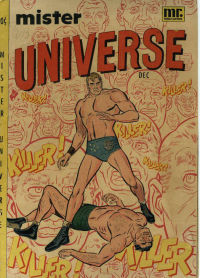
Be Mr. Universe:
You can't stop the signal, Mal. Everything goes somewhere, and I go everywhere.or Mrs. or Ms. Universe.

Socrates' Introduction to His Defense

And Socrates' character shines through. The opening sarcasm demonstrates wit, rather than arrogance. Plato begins establishing that Socrates is not an academic dweeb. His character is deferential to the jury, rather than disrespectfully insolent or snubbing them.
We're to of assumed Socrates' accusers have poisoned the well. Socrates responds by shifting through a series of contrasts: Socrates/accusers, speaking truth/rhetoric, spontaneous/crafted, stranger/familiar. He does not mince words, contrasting "lying" and "truthfulness". Socrates mocks the warning against him to the jury, unpacking its meaning by claiming a commitment to truth. And the truth of his speech unfolds in one way as a critique of the injustice of Athens' political activities. There's the archetype here of the elderly who's too old for young men's games.
Socrates then ask the jury to forgive his non-custom conforming speech as he'll be employing the same type as he typically does in the market place. The customary speech is supposedly foreign to his tongue, so they should treat him as a stranger. Rather than be prejudiced, the jury should evaluate Socrates' claims. Plato suggest that this is excellence (ἀρετή) just as Socrates' excellence is telling the truth.
The implied audience is picking up Apology asking themselves "why did we convict Socrates?" By this point in time, they know how the drama ends. They're familiar with the idea that it was Socrates' own fault for not adjusting to "the way things are done", a familiar logic in our own time. They've heard he was an ass. They've heard that these led to the unfortunate mistake of convicting him. They've heard he was an "atheist". They've heard he was a sophist. They've heard that these led him to being justly convicted. For now Plato's polemic argues against those who wish to shift responsibility for Socrates' sentence upon his "unconventional" manner, offering the reader a differing perspective.
Obviously, there's danger of reading into any text. Plato is not concerned with Athens' rhetorical atmosphere excluding other types of voices ignored at Justice's expense, but rather its refusal to hear logos discourse. Today folks still wish to privilege rational discourse over the rhetorical theatrics of the political sphere.
20 July 2010
Plato's First Tetralogy
In each of the four narratives, the reader is invited into a world inhabited by Socrates, to follow his last days and witness his character.
In Euthyphro we walk beside him as we watch him expose Euthyphro's bs, marveling at his ability to unravel Euthyphro's claims. We laugh at his wit and worry over his fate.
In the Apology we sit amongst the jurors, critically evaluating what is said and meditating on the transpired events now removed from the theatrics.
In Crito, if we sympathetic we plea alongside, hoping he'll be persuaded to reason, while if antagonistic patiently watch if he proves himself all too human, thereby vindicating ourselves.
In the death scene of Phaedo, we find hope in Socrates' fate yet are embarrassed by our grief. We marvel at his courage, learn from his counsel, relish our final moments with this great man.
Here we explore for ourselves a man quite unlike who we imagined from his reputation. We accede to some points, form our own views, distance ourselves from shortcomings of other characters, and enjoy the pleasure of discoursing w/ a man who threw all of Athens into an uproar.
Rethinking New: Part IV
So...who do you trust? For me it boils down to two important components: a capacity for understanding and honesty.
As much as one might not trust the medical-pharmaceutical industrial complex, they've got the capacity for understanding that honest Betty Sue from Deming, NM doesn't. As far as medicine is concerned, research on the Internet doesn't count. It's possible your local pastor might not have the philosophical training to understand what pomos or neo-Marxist are saying. The face on TV is reading a teleprompter. Economics requires high-school math unless you're a genius. You need to find folks who have the capacity for understanding.
This is what the capacity for understanding does not mean: they come to the "orthodox" opinions. Honest, intellectually equal folks have differing viewpoints. Again find the best that each position has to offer and find different ones. It also doesn't mean an "expert" or someone with a Ph.D. As anyone who has first-hand experience with something might suggest, there's a lot you can't find in books (or intelligentsia). Often times the "shocking" discovery is made that most laypersons understood something all along before the cognoscenti caught up. Not a mystery; it's called common sense. People are stupid; people aren't stupid. Plus laypersons and intelligentsia share a prejudice for my favorite passtime: bsing.
Honesty is a hard virtue to really embody IMO. Its simplest level is not lying and not trying to deceive others. Another is the issue of acting in good faith and sincerity, conditioned by a process of relinquishing self-deception; here the news/blog business often fail. Thirdly is an openness to others that allows oneself to be known. You're not looking for this with news, unless you're talking about friends. In fact I'd be suspicious elsewhere too, precisely cause that "personableness" is often an illusion intentionally manufactured to engender trust. This third level is more of participating honestly in community where it's appropriate.
To elaborate on the second part, good faith is the intent to fulfill expectations that one is leading others to assume. OTOH, people need to watch out for false expectations. If someone is completely aware of what they're doing and how the public is incorrectly perceiving them and they do nothing to correct or even capitalize on it, that's bad faith. If you watched the previously posted clip, that's what Crossfire was doing. It's often rationalized that "everyone" knows its a game, but that's not an excuse. Intentionally legitimating an unqualified authority is also bad faith. The ways which corporate news do this are inexhaustible. Feigning neutrality is a classic example of insincerity. Revealing assumptions and allegiances is a big help to avoiding this particular form; stating them and going on to pretend that these aren't affecting anything while proceeding to promote propaganda is not.
What I'm not suggesting is honesty = transparency. Privacy is a good thing. It is also not assuming falsely assuming responsibility for every falsehood or mistake that one has or expecting it of others. We're human, which entails a level of imperfectionism and a willingness to risk being wrong. Especially with professionalism in the equation, people always act differently in front of an audience than otherwise. This isn't insincerity per se. It also ties into false expectations, as you're not "betrayed" if in real life they're different from how you'd imagined them.
Many folks employ what we like to call a hermeneutic of suspicion in a totalizing fashion, and that's bad. They're not just being critical, arguably an epistemic virtue. They're attempting to move beyond this to reveal or uncover or "unmask" what's really going on behind any argument or group, which might not even be conscious to the author/speaker/people. It is reading between the lines par excellence. Now as a caveat I'll say this, it is sometimes appropriate to employ a hermeneutic of suspicion, particularly when people act or events are suspicious! So it's not an either/or deal like I'm making it out to be. The reason I say it's bad is cause they're destroying the possibility for a healthy relationship and discussion (assuming it can be had). They're showing a fundamental disrespect for and insincerely engaging others. On the other hand if their hermeneutics leads them into dialogue with the subject, perhaps that's a sign they're employing it appropriately. Generally that's not the case, and they're impervious to relevant feedback. Indeed, often times they'll deconstruct sciences (which I actually think is a good thing), but then not understanding what's been discredited interpret in such a fashion as to ignore any findings. Please note: this is a blog, not a rigorous examination on any philosophical articulations but a commentary and critique on their abuses. These aren't hardline distinctions obviously, and it's completely possible for someone to be acting in bad faith, insincere, and deceiving themselves at the same time.
Some good reasons not to trust someone. The widely heldness of a belief in what their articulating. The task is verifying not taking for granted. Authority, especially an unqualified one. They really need to be field-specific competent; news sources bring these in all the time. Prejudices. Now we are all prejudiced. We have a whole range of preferences when it comes to trust, from the symmetry of the face, to how closely they look like us, whether they're ideologically similar, their tone of voice. This is something that's still being explored, in the mean time we need to be aware and be careful. All these are HORRIBLE reasons to trust someone.
There's two important senses of trust, and they shouldn't be confused. There's the idealistic version of trust and a sense of realist trust, where we trust others to behave consistently to themselves. While we can open ourselves up to the first, the second can be just as reliable. For example, if someone has consistently "stolen" something from you, they've probably broken your idealistic trust, but you can have a realistic trust that they'll do it again should the opportunity arises. News sources can be trusted and relied on in this second regard. Are they competent? If not they can be trusted to need someone else to interpret and get their facts for them. If we're talking about the junk food, I can list off examples from NPR to CNN to Fox.
Final thoughts: learn to trust yourselves. If you're male, learn to work on self-deception (trust me on this). It's easier to trust yourself if you're in community, but that's a different issue. "Strangers", that includes all news sources, need to earn your trust. If you go around naively giving the benefit of the doubt, you're gonna head straight to cynicism. Rather cultivate maturity with your trust. Take risk on insignificant issues for example, and as said before, to be wrong is human and insignificant. Randomly review what is being said. There's lots of ways.
Thoughts anyone? On the post, news, dinner?
19 July 2010
Isaiah 53
Guess I'm in a hip-hop mood? Huh, this came up in one of the blogs I follow. The translation is NLT and produced by GRIP.
The New "Imagine"
A few months ago, Tim Wise wrote a widely circulated article called, "Imagine if the Tea Party Was Black" which challenged America to take a close look at the hypocrisy of the Right Wing. Now, a Pittsburgh rapper is accepting his challenge in true Hip Hop form. Jasiri X has released a video called "What if the Tea Party was Black." The Hip Hop artist says that he got the idea when Paradise,a member of the pro-black rap group X-Clan, forwarded him a copy of Wise's article. "I saw the article and I liked the concept," says the rapper. So Jasiri hit the studio with producer Cynik Lethal while Paradise grabbed his video camera and they went on their mission to defeat the Right Wing propaganda machine.Gotta admit, it's got a better rhythm than the Beatles.
18 July 2010
Evangelicalism
 Pop Quiz: Guess what metropolitan area or city has the most evangelicals according to Barna?
For some unknown reason I wanted to look at what constituted evangelicalism and came across Bebbington's work. It's weird as the search words my subconscious conjured for Google led me straight to him. Intrigued, I dug a little more, the familiarity ended up being from exposure when Moeller referenced him 6 years ago while I was ranting about Evangelicals' anti-intellectualism. It stopped my ranting and grabbed my attention then too, a new shiny
To clarify, let me state how I understand these terms. As neutral as possible, biblicism is a view of the Bible as the Word of God, a view of inerrancy, and a hermeneutic of literalism and illumination by the Holy Spirit (proof-texting, empty clichés, christocentric, and letterism). Conversionism is beating the dead horse view that humans need to have a personalized, transformative encounter w/ God culminating in this experiential, individualized relationship. It seems to range the spectrum from a formulaic "sinners" prayer, à la Graham to this "profound" quasi-mystical attunement w/ disgruntles (noticeably expectations not being met). As for activism, I actually prefer the term missional instead, but activism is evangelism, social work, and cultural engagement with an emphasis on confession of Jesus. Mind you, these are my words not his. Crucicentrism is an atoning power of the cross fixation. Some of what I read is that this is especially in the context of a Christocentric read of the Bible.
And this makes sense at one level. I think of Evangelical churches and I think of alter-calls at the end of services rather than the Eucharist. (Like to joke that Baptist don't actually have "church" except four times a year, they have chapel.). Sometimes their associative mental image is with JWs and Mormons. Revivals and tracts. There's conversations about Christians at least "being a witness" every time you meet someone and more typically manipulative strategies for "winning" friends and strangers to Christ (e.g. flirt to convert, okay bad one. A better one though is the "be their friend so that".). Forcing the Bible to speak to "all aspects of life" is common, and there's a lot of publicity about their refusal to cede on any point they interpret as contrary to the Word of God. Ironically, the term "missional" finds currency in critiques of the Evangelical church, many of which are overstated but some highlight the problematic nature of such a universal marker. It's problematic to characterize the Evangelical church by "activism" strictly as you have many exceptions like seeker-sensitive churches or loosely where the term loses any distinguishing capacity and so flexible as to easily fit even an atheistic hermit in the desert. I really feel at a loss here not being able to reference Bebbington's work for his understanding. Bebbington's definition stems from in-depth historical analysis; whereas I guess I just always thought of it as this offshoot of fundamentalism, whom more and more quit caring about their "sins", a trajectory it's still on. From what I've seen now though... NOPE. Way more complex and diverse, with a far richer history and more sophistication than merely different than mainline and black churches. Of course it has exploded wide open now with evangelicalism as a global phenomenon.
I'll comment later on other issues, but Bebbington was the only common definition with a lot of variations. The Barna Group has a similar 9-point criteria for identifying Evangelicals. One of these, a continuous personal commitment to Jesus, is a self-perceived existential condition. The other 7 though are reflective of a theological distinctiveness, plus an ambiguous one that I interpret as a qualitative experiential marker.
1. Heavenly afterlife because of confession and accepting of JesusIt should be noted that their criteria for identifying born-again Christians as opposed to a full-on evangelical is the existential condition and the first theological marker. Listen, we're all thinking it, so I'm just gonna come out and say it. Barna is a bunch of sectarian classist. Huh? You were thinking something different? Oops, guess it's just me. Alright, perhaps that's a good way to think of the congregation, but to start sifting through its members. I mean folks who've participated in Evangelical communities their whole life aren't "real" Evangelicals. Please. There needs to be a degree of disconnect in the categorization at the congregational level and its descriptive application at the level of persons. That's where it fails. Plus personally, I think the notion of 100% identification is absurd, realizing some of you may disagree.
2. Faith has a high priority.
3. Proselytization
4. Satan's existence
5. Eternal salvation through grace precluding works
6. Sinlessness of Jesus
7. Scriptural inerrancy
8. God's omnipotence, omniscience, and perfection as Creator and Lord
A third approach is the World Evangelical Alliance's". This one requires a finer interpretative brush than I care to pull out, so if you want the full she-bang I suggest you read it yourself. All I'll say is that it starts off with this generic definition of "evangelical" and then unpacks that in a way that is more recognizably Evangelical. It's not very helpful, and I think the ecumenical tone is the most significant clue as to why they went that route. It does have going for it though before I poo-poo everything. It weaves through incidental and defining characteristics and beliefs in such a way that unlike Dr. Academic's and Mr. Ideologue's defs would resonate with more folks who sit in the pews and might personally articulate themselves. At least that's my guess. *shrug* The dilemma there is a susceptibility to self-awareness birthed from limited exposure of the Church. The danger is abuse for excluding other while the benefit is they're often times better equipped to recognize and acknowledge other Evangelicals. Unfortunately, this disassociation can especially extend to such superficial sentiments as the others aren't demonstrating the "walk" or due to feeling anxiety fear or are labelled "nominal".
Also examined urbandictionary.com. I picked "Evangelical movement" rather than "evangelical" cause the "evangelical" entries actually kinda made sense, which was not what I was looking for.
A group of fat, lazy, unintelligent, uninformed extreme right-wing conservatives overly concerned with pointless social issues and ignorantly blissful of the truly important matters at hand that could actually affect our lives.This reflects my basic view.
-Class, explain to me the class structure of ancient rome.
-uhhhhh. . . Jesus?
-well, close enough.
Relevance
It'd be really cool to right now be make that Rush sound of paper ruffling in front of a microphone, no? Anyways, I think it's a cool sound effect.
Quiz Answer: If you guessed "Lost" Angeles, you're correct! In fact, they have more than New York, Chicago, and Boston combined. I personally am not ashamed to admit I didn't see that coming. You? Esther might of known, but I'm gonna make an educated guess and figure most of you didn't. The point being Evangelicals defy stereotyping.
As Barna argues there's a difference between media's portrayal of Evangelicals and their own subcultural reality and self-perception. As for media misrepresentation, they can take a ticket and get in line for all I care. Admittedly, it does influence profoundly outsider and self-perceptions, but that doesn't abnegate our responsibility for our own understanding. Still it'd help if they stopped using code. Call a conservative a conservative if that's what your fronting and stop underhandedly referring to Evangelicals as conservatives. More significant is the difference between self-perception and where they're actually at. Closing this gap increases understanding and channels the frustrations and areas of complacency voiced and quietly ruminated by those in the movement and its critics. IOWs it facilitates constructive responses to issues with Evangelicalism.
BTW - to give you an idea of how it shifts the landscape. Using Barna's definition only 8% of the population is Evangelical, with these having no denominational specificity (so they can be Coptics or Catholic nuns). Wow, that's unexpected as their criteria wasn't anything I didn't think most Evangelicals believed anyways. Pew with a lot of dancing puts it at 26.3%, barely above Catholics at 23.9%. Most media surveys rank it much higher based on purely self-identification. The issue of the term's ambiguity, rather than its fluitity, is that people then are more individually interpretative from isolated internalized experiences and viewpoints, media portrayals, and sloppy reasons.
 So, what do you think an Evangelical is?
Some folks wanna exclude the Pentecostals, or at least Oneness Pentecostals. It seems everyone has an opinion, but the majority of charismatics and cessationist Evangelicals think they're under the same roof. Apparently the PCA is too, which surprised me. I don't know why since Schaeffer was and actively part of what would become the PCA. Soft idealization? Don't know why seriously. Interestingly, the PCA is the only denom affiliated with both the NAE and the NCC. The AM is only in the NAE, though they're in the Anglican Communion and thus by extension(?) in the NCC. (I'll get to the significance in a bit.
Part of the problem is I don't know enough. All four were crafted using criteria that functionally focused upon their implicit purpose. Any purpose I've got is a muddled, convoluted mess half of which is buried. There's no abductive element to my reasoning; they're just "not satisfactory", and I can't elucidate why. It does seem best to suggest a model which uses multiple definitions to target recognized groups we're certain of. So any culturally in an Evangelical church and a definition for those non-associated but clearly Evangelical minus those clearly not Evangelical in a church. This is different than the Barna methodology, which screens people through a theological filter. What I'm talking about is say excluding an Atheist or Catholic or Episcopalian who goes merely due to their spouse. Meanwhile criteria for an Evangelical church is weighed heavily by associative relations like the NAE and historical developments and less so purely for theological conformity. Of course, this isn't a strong differentiation, as often those historical developments are driven by doctrinal issues and acknowledgement by associative relations are underlied with theological similarity.
Importantly though, one shouldn't conflate Churches with members, as they not reflective in scale. This is a chief failure of Barna and Bebbington's criteria. They too strongly predefine the Evangelical and end up only being able to be challenged by those looking precisely as they expected. Rather judge the churches and allow the congregations to work it out. On the other hand, we should tighten our consideration of membership qualifiers to compensate for inflated rolls, and allow even tighter definitions for more nuanced and accurate labels.
Anyways, that's kinda some of my thoughts from the last week, take what you will. I think I've gone as far as possible with couch-potato research. Then next step is to pick up some more substantive sources than news articles and websites or do some research or get some feedback/opinions from other people, preferably those who actually know or are Evangelicals. Or I could get lucky and discover a breakthrough I've overlooked that has all the answers.
So, what your take on the whole Evangelical phenomenon? Comments on definition? Challenges facing the movement? Unfair caricature and portrayals? Anger, frustration, confusion? Anything I got wrong (factual corrections especially welcomed, trying to get a better sense of all this and as I'm not Evangelical)? Thoughts on movies, the World Cup? Which by the way, did anyone noticed they shortened the duration of those camera shots during the final? Huh‽ Must of done some homework and got their act together.
A descent read for disenchanted evangelicals.
17 July 2010
Your comment is awaiting moderation.
Wow, that's even more foreboding than "approval"; where's the "Have a nice day!" follow-up, I feel robbed! I'm expecting at least the courtesy of "why don't you see yourself out?"
Obviously, this is a pet-peeve of mine. On principle, that was my first and last comment on that friend's blog. Of course, my resolve is that of a smoker trying to quit, so if the mood strikes it doesn't take much overwhelming to reneg on posting again. But what's the deal? Surely we're not that big of control-freaks? Or that contemptuous of other's remarks? This friend might not always listen to what others say (who does?), but she always hears them out. And sure, she can be overly superficial with image (again, who isn't?), but if anything frequent comments are fashionable, assuming it's not just folks bickering at one another, no? The level of discourse is what it is on comments, but isn't some life to the conversation better than none?
I mean, come on, there's another human being on the other side of that console. Obviously, I have some personal issues to work out. Many of you have seen me rant on hierarchy, openness, space for speaking up. I personally might be a "little" sensitive and overreact to hints of odious practices like modding. But really, what is the point?
As for anti-spam, it seems a little quick on the drawl, no? What about captchas? Sure they're hardly foolproof or anything like that, but to start off with having messages approved?
I'm working on some ideas for understanding it and wanna hear your feedback. In the mean time, gonna experiment with valedictions like "What's your take?" and "thoughts?" to see if that has any affect on fostering some discussions so this blog isn't as monological (monological just sounds like something one wouldn't want to be characterized as, no?).
Subscribe to:
Posts (Atom)